
By Tom Watson, as Published in Big River magazine
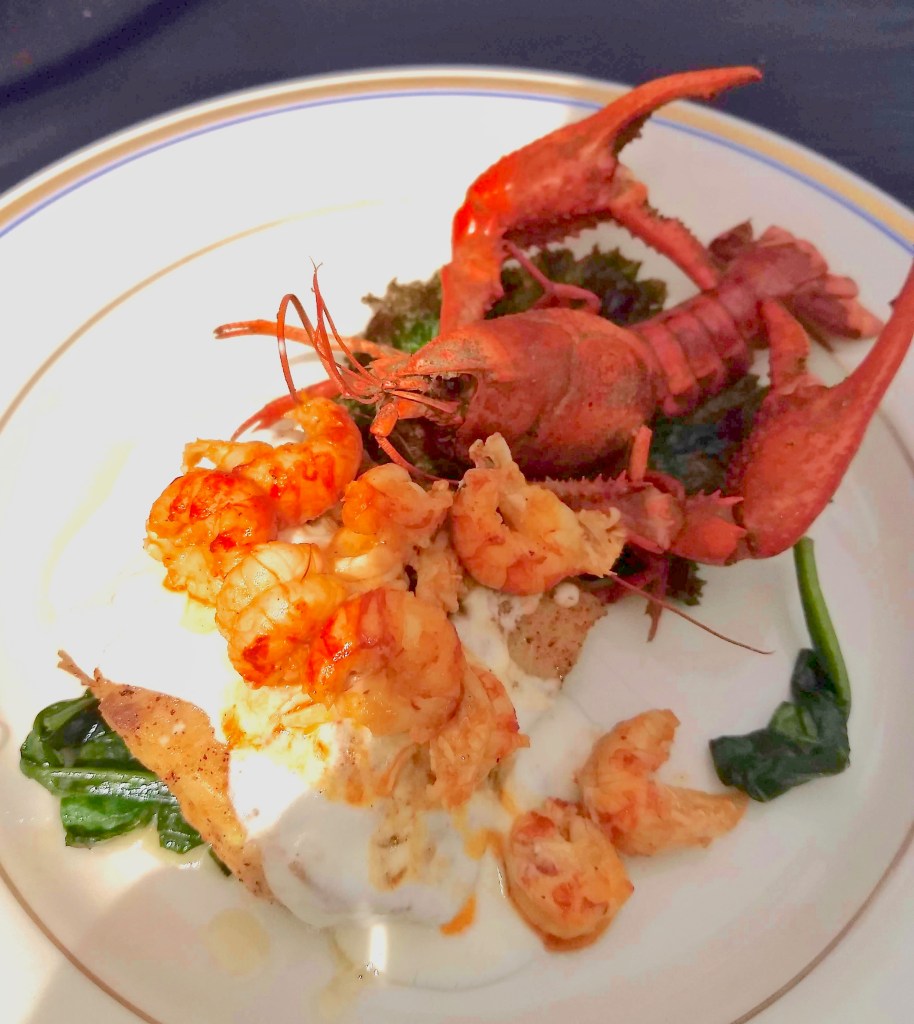
The plating of the entrée dish, with the brilliant reds and vivid oranges of the crawfish perched atop a sauce-covered fish fillet was even tastier that its eye appeal. Enough so that it took third place in a recent NOLA Navy Cook-off that paired NAVY and regional Louisiana chefs together in a creative cooking competition.
The event was yet another opportunity to introduce and broaden the awareness of an emerging cuisine campaign that is slowly expanding up the Mississippi River from the delta region to the Great Lakes: “Can’t Beat ‘Em – Eat ‘Em!”
The “Em” is for invasive species and is a slow, but persistent emergence of ways to deal with infestations of non-native (invasive) animal and plant species into an area – and most often creating a serious and lasting threat to those native critters and plants.
In the case of this prize-winning recipe, the course served during this particular competition featured fresh Louisiana crawfish and silver carp accompanied by fresh spinach, cajun seasoning, white wine and Louisiana hot sauce – delectable and serious table fare using species that are considered invasive in several states all up and down the Mighty Mississip’. The Asian carp are considered very tasty and a good source of protein, and being plankton-eaters, low in accumulated toxins (mercury for example).
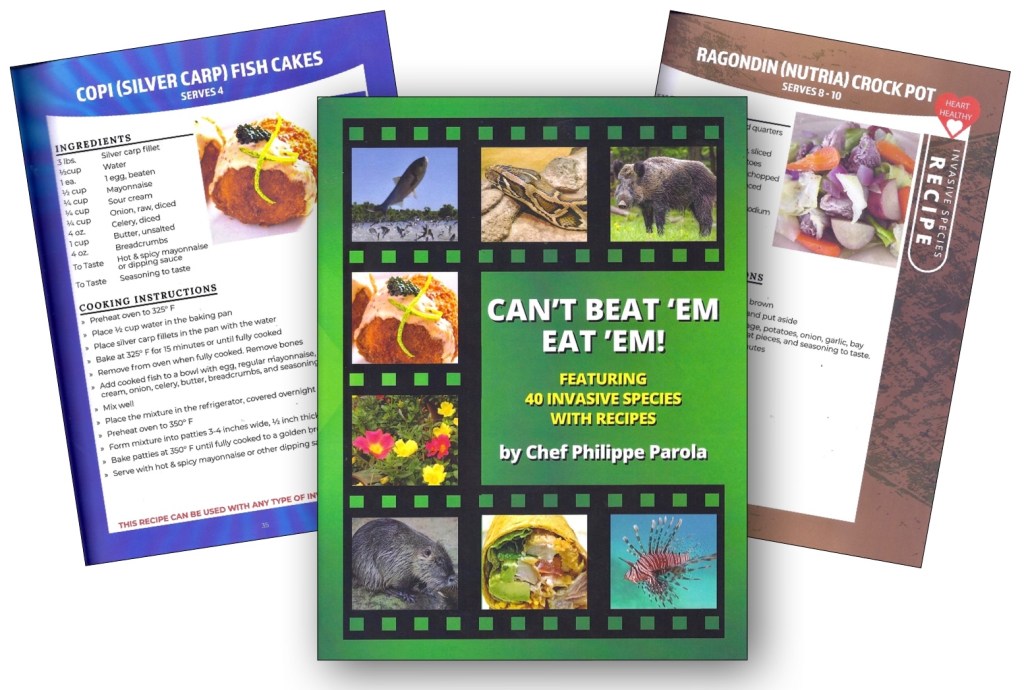
Baton Rouge Chef Philippe Parola, author of his “Can’t Beat ‘Em-Eat ‘Em” cookbook, is among several progressive food experts who have been advocating, for decades, the human consumption-driven opportunities for dealing with such species.
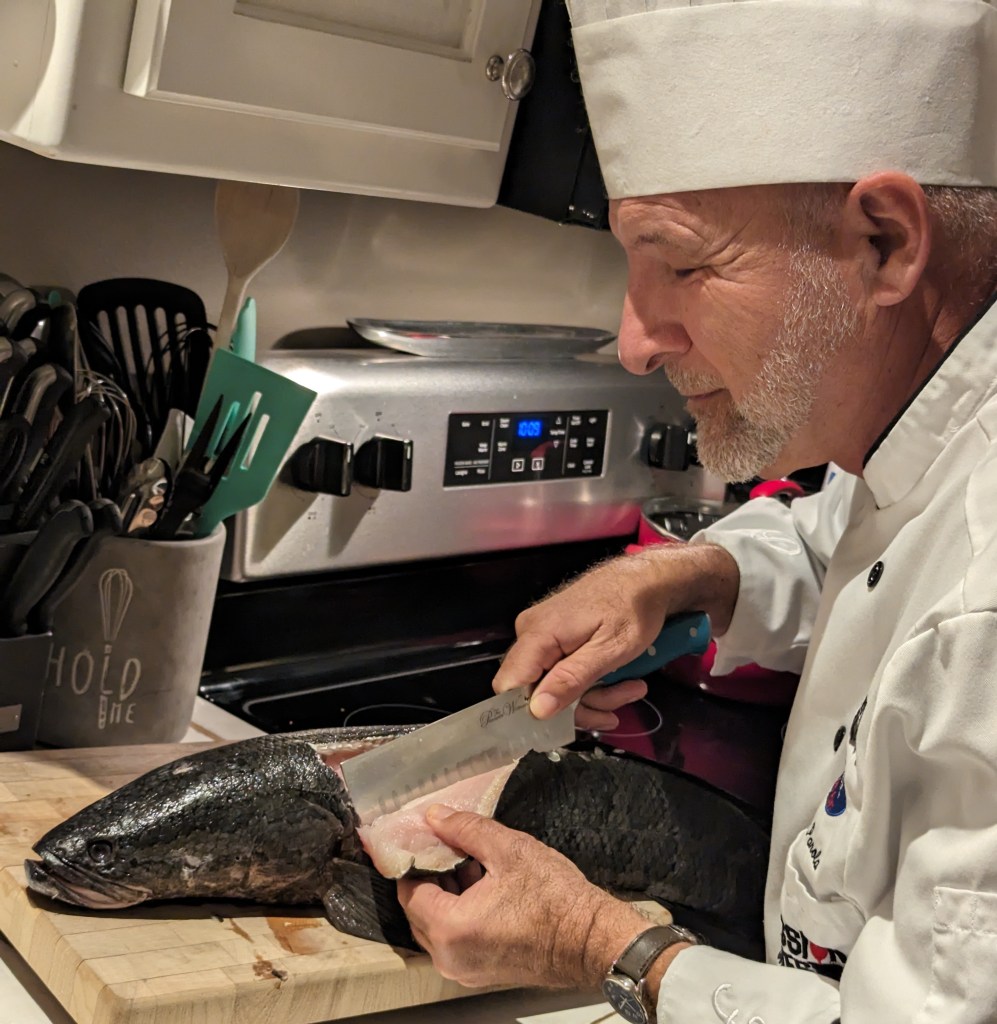
“Our solution is not to eradicate invasive species but to put a dent into their populations so one day they can live in harmony with native species,” says Parola. That’s an imposing challenge that communities along the upper Mississippi River have been facing to varying degrees for the last century.
The Mississippi River is part of a network of over 1.5 million miles of waterways in a watershed that drains 2/3 of the continental United States. Each tributary is a conduit for invasive species to enter a new system of rivers and lakes. Since being released into open waters in the 1960s in Arkansas, Asian carp (bighead, silver, black and grass) have spread to a point where they now make up 90 percent of the biomass in parts of the Illinois and Mississippi Rivers.
The main approach used to mitigate these invasive carp is to eradicate as many as possible using several methods, from air curtains, mechanical obstacles and even sound to herd them into harvesting nets. “A lot of people think they can eradicate them, it’s been going on for years,” says Brad Wicks, Operations Manager at Schafer Fisheries in Fulton, Il, and adds “if they could they would have already.”
So what’s an another solution? Chef Philippe and others want to re-direct some of the government funding so instead of being spent on what seems like a fool’s errand of trying to eliminate these invaders, invest it towards finding ways to make it more economically feasible to process the fish for human consumption, pet foods and fertilizers.
Parola says “We are spending billions of dollars trying to eradicate species that are, in many ways, perfectly natural foods.” Expanding that opportunity also adds jobs, boosts local economies and helps towards having a sustainable environment – and hopefully finding ways to mitigate hunger for an expanding world population.
The nutritional and taste values of the Asian carp are right up there with more common game fish. Their flesh has an abundance of Omega 3 fatty acids, they are plankton eaters and hence “vegetarians” meaning they have lower levels of toxins (mercury) accumulating in their bodies. The meat is repeatedly described as being quite tasty. A USGS research biologist described its meat as “white, flaky and mild” – meat he said reminded him more of cod.
Currently, Minnesota is monitoring its Mississippi network of rivers for invasion sites and has yet detected an invasion encroaching into many Minnesota waters. Illinois, on the other hand, cannot indeed, beat ‘em so has developed a program to attempt to control their numbers by convincing the public to eating them instead! Campaigns were developed to remove the stigma of carp as “rough”or “trash” fish by giving them a new name: “Copi” (as a nod to the COPIous number of carp) and creating positive associations with this new cuisine-in-progress. Parola re-named his carp source as “Silverfin”.
Schafer’s Wicks says that “the problem in America is that it’s a boney fish” and that “a current process of deboning the fillet results in a lot of waste – it’s not profitable.” One solution that has merit is a process to mince the meat for use in fish patties, cakes, and various other menu items – but do it at a cheaper cost. Schafer has sought funding in the past to develop a minced carp product that could be packaged and frozen for distribution in times of national emergencies or disasters.
Another popular way of preparing carp is to pickle it, which also softens the bones in the process.
In the broadest sense, “invasive” often refers to species that are non-native to North America. Those that are considered edible in America include: all the species of carp (originating from Eastern Asia); Northern Snakefish (native to China/Korea/Russia); Red Crawfish (considered invasive north of it’s native range within the southern Mississippi River basin); Golden Clams (Southern and Eastern Europe); Wild boar (throughout Eurasia); Nutria (northern and eastern South America); Rock Dove (native to Europe); and even the bull frog (native to central and SE United states but invasive in other regions). All these species are edible and incorporated into the Beat ‘Em-Eat ‘Em cuisine.
For states within the Driftless region of the upper Mississippi River the most common invasive species listed for each state include: all four carp species (MN); common and bighead carp (IA) and grass/silver/bighead (IL). Bull frogs are considered invasive in Wisconsin and Iowa); and Red Swamp Crawfish in Minnesota. A complete list of all invasive species can be found on each state’s DNR website. So just how valid is the claim that these are a good food source? There’s a saying among survival trainers “just because it’s edible, doesn’t mean it’s going to taste good.” All the taste tests posted throughout the internet vouch for the truly, and perhaps surprisingly flavorful aspects of carp, whether butterflied and grilled on the BBQ or sliced and deep-fried into fish fingers or in several other popular ways to prepare them.
Here are a few examples of what kinds of recipes one can prepare using local, fresh, nutritious carp and other invasive species:
Copi (Silver carp) Fish Cakes: pre-cooked and de-boned carp that is mixed with eggs, mayo, sour cream, onions, celery, butter, bread crumbs and seasoning and formed into 3-4” diameter/1/2” thick patties and baked;
Grass Carp AuGratin: Butterflied/skin-on carp splayed on BBQ grill, remove and de-bone, place in a baking pan, cover fish with cream and cheese, topped with cheddar and bake;
Cajun Style Boiled Red Crawfish: boil onions, garlilc, lemons, red potatoes, salt/red pepper, add corn-on-cob, mushrooms and boil for 5 minutes more (stirring); add live crawfish to pot, simmer for 15 minutes, remove from heat and let sit for 15 minutes more – serve.
And here’s one of the many invasive mammal recipes included in Chef Parola’s cookbook: Ragondin(Nutria-a beaver-like pond dweller) Crock Pot: Nutria hind quarters seasoned and then grilled until golden brown; fill crock pot with carrots, cabbage, potatoes, onion, garlic, bay leaves chicken broth and cut-up grilled nutria pieces – cook for 30 minutes and serve (as is or over rice!).
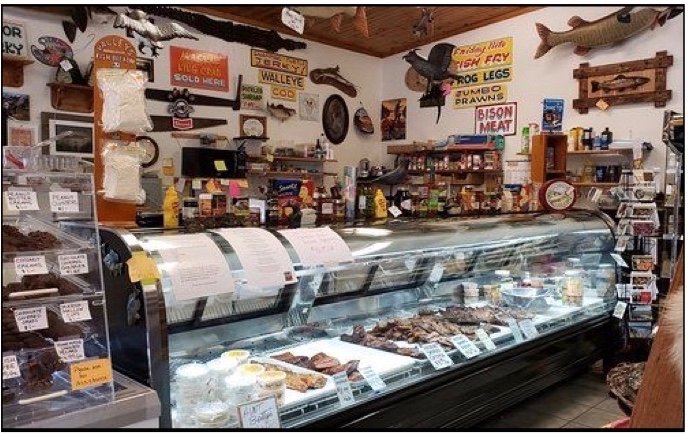
You can sample some prepared “invasive” species and other exotics from the upper sections of the river at Valley Fish and Cheese Market in Prairie Du Chien, Wisconsin where owner Mike Valley offers “anything I can do myself” which besides smoked carp, alligator, and frog legs includes three varieties of catfish baloney, and snapping turtle summer sausage.
As Chef Parola says: “Our solution is not to eradicate invasive species but to put a dent into their populations so one day they can live in harmony with native species. One way to do that, offers Parola, is to be “focused on research and development towards the edibility of invasive species that could save the ecosystem”. Parola says it can happen starting with just ‘One bite at a time! ‘
Bon Appétit mes amis invas-ivores.
 TOMOUTDOORS.COM
Leave a comment